
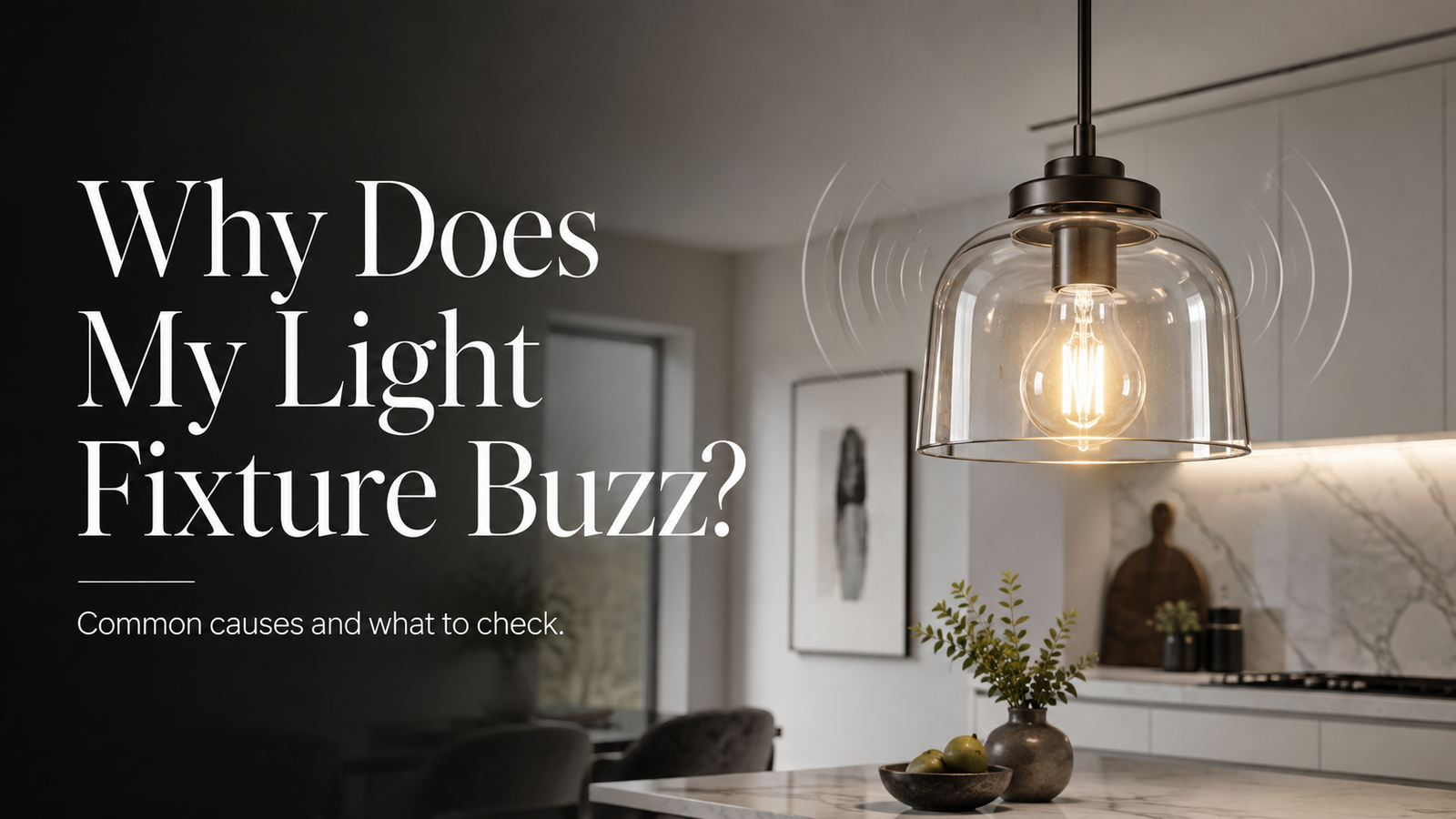

Why Does My Light Fixture Buzz?
A light fixture should normally operate quietly. If you begin hearing a buzzing or humming sound, it may indicate an issue with the bulb, dimmer switch, electrical connection, or fixture components.
Some buzzing is harmless, while other situations may require closer attention. Understanding why a light fixture buzzes can help you narrow down the cause and decide whether the problem can be fixed with a simple bulb replacement or needs professional inspection.
1. The Light Bulb May Be the Problem
One of the first things to check is the bulb itself.
Some bulbs can produce a faint buzzing sound when electricity passes through their internal components. This is especially common with certain LED and fluorescent bulbs.
You may notice buzzing because of:
- A low-quality or aging bulb
- Internal bulb components beginning to fail
- Incompatibility with the fixture
- Incompatibility with a dimmer switch
Try replacing the bulb with a compatible bulb from a reputable manufacturer. If the buzzing disappears, the original bulb was likely the cause.
2. Your Dimmer Switch May Be Causing the Buzz
Dimmer switches are a common source of buzzing in lighting systems.
Older dimmers were often designed for incandescent bulbs and may not work properly with modern LEDs.
When an incompatible LED bulb is connected to an older dimmer, you may experience:
- Buzzing
- Flickering
- Uneven dimming
- Lights that do not turn fully off
- Sudden changes in brightness
Using dimmable LED bulbs with an LED-compatible dimmer can usually improve performance. When selecting replacement bulbs, look for products specifically rated as dimmable. The Vivio ST19 Vintage Filament LED Bulb and Vivio BR20 LED Flood Light are both designed for use with standard LED-compatible dimmers.
3. The LED Bulb May Not Be Dimmable
If your fixture is connected to a dimmer, the LED bulb itself must also be rated for dimming.
Using a standard non-dimmable LED on a dimmer can cause the bulb's internal electronics to behave unpredictably.
The result may include humming, buzzing, flickering, or shortened bulb life.
Check the bulb packaging or specifications for a "dimmable" label before installing it on a dimmer-controlled circuit.
4. The Bulb Could Be Loose
A loose bulb can sometimes create poor electrical contact inside the socket.
That inconsistent connection may produce buzzing, flickering, or both.
Turn off the fixture and allow the bulb to cool before checking that it is securely installed.
The bulb should be snug, but it should not be overtightened.
If the socket itself feels loose or damaged, the fixture may need professional inspection.
5. Loose Electrical Connections Can Create Noise
Sometimes the buzzing is not coming from the bulb at all.
Loose wiring inside the fixture, electrical box, switch, or connection point can create electrical noise.
Warning signs may include:
- Buzzing that becomes louder over time
- Flickering at the same time as the buzzing
- A warm or hot switch
- Intermittent operation
- A burning smell
- Discoloration around the fixture or switch
Electrical connections should only be inspected or repaired by someone qualified to work on the circuit.
6. The Fixture's LED Driver May Be Buzzing

Integrated LED fixtures do not use traditional replaceable bulbs.
Instead, they usually contain an LED light source and an electronic driver that regulates the electricity supplied to the LEDs.
In some fixtures, the driver can produce a faint hum or buzz.
This may happen because of:
- A failing driver
- Dimmer incompatibility
- Voltage irregularities
- Low-quality electronic components
- Normal electrical vibration
A very faint sound may not be noticeable during normal use, but loud or worsening buzzing could indicate that the fixture or driver should be inspected.
When shopping for integrated LED fixtures, the quality of the driver matters as much as the light output. Fixtures like the Vivio 5/6-inch Low Profile LED Disk Light and Vivio Soffi LED Rectangle Vanity are engineered so the LED source, driver, and dimming capability are matched together from the factory - which generally reduces the likelihood of driver-related buzzing compared with pairing a separate bulb and dimmer that may not be optimized for each other.
7. Fluorescent Fixtures Can Buzz Too
Older fluorescent fixtures are especially known for producing humming or buzzing sounds.
The noise often comes from the ballast, which controls the electrical current supplied to the fluorescent tubes.
As a ballast ages, the buzzing may become noticeably louder.
Replacing the ballast may solve the problem, but in many cases homeowners choose to replace older fluorescent fixtures with modern LED lighting instead. LED flush mounts and low-profile disk lights do not use a ballast, eliminating this particular source of noise entirely. Vivio's LED disk lights mount directly to a junction box and can serve as a practical replacement for older fluorescent ceiling fixtures in kitchens, utility rooms, and basements.
8. Voltage Fluctuations May Affect the Fixture
Electrical voltage that is unstable or fluctuating can sometimes cause lighting components to make noise.
You may notice buzzing or changes in brightness when large appliances turn on, including:
- Air conditioners
- Refrigerators
- Washers or dryers
- Microwaves
- Power tools
Minor changes may occasionally occur, but frequent buzzing or flickering throughout multiple areas of the home should be evaluated by an electrician.
Why Does My Light Fixture Buzz Only When Dimmed?
If the fixture becomes quiet at full brightness but starts buzzing when you lower the dimmer, compatibility is one of the most likely causes.
LED dimming requires the bulb, fixture, driver, and dimmer to work together properly.
Try confirming that:
- The bulb is labeled dimmable
- The dimmer is designed for LED lighting
- The fixture supports dimming
- The bulb falls within the dimmer's recommended load range
Replacing an older incandescent-style dimmer with an LED-compatible model may significantly reduce buzzing.
How Do You Stop a Light Fixture From Buzzing?
Start with the simplest possibilities.
Replace the bulb with another compatible bulb and make sure it is properly installed.
If the fixture uses a dimmer, confirm that both the bulb and dimmer are designed for LED lighting.
For integrated LED fixtures, check whether the fixture is rated for use with your existing dimmer.
If the buzzing continues, becomes louder, or appears to come from the electrical box or switch rather than the bulb, professional inspection may be necessary.
Is a Buzzing Light Fixture Dangerous?
Not every buzzing light fixture is dangerous.
A faint hum from certain bulbs, dimmers, or LED drivers may simply be the result of electrical components operating normally.
However, buzzing should not be ignored when it is accompanied by:
- Burning smells
- Excessive heat
- Sparks
- Flickering
- Discolored switches or outlets
- Repeated circuit breaker trips
- Crackling or popping sounds
Turn off the affected circuit and contact a qualified electrician if you notice any of these warning signs.
Final Thoughts
A buzzing light fixture can have several possible causes, including an aging bulb, incompatible dimmer, loose connection, fluorescent ballast, or integrated LED driver.
Begin by checking the bulb and dimmer compatibility. In many cases, replacing the bulb or installing an LED-compatible dimmer can solve the problem.
If the buzzing continues or is accompanied by heat, burning smells, flickering, or other electrical warning signs, have the fixture and circuit inspected by a qualified electrician.
Browse Vivio Lighting's dimmable LED bulbs and integrated LED fixtures for options designed to minimize compatibility issues.